


Software purchases are almost always decided the wrong way: by comparing feature lists and subscription prices. Features do not generate money, and the subscription price is not the real cost.
The framework below is meant to produce a decision in an hour, not three months. You need five numbers. If you cannot estimate one of them, that itself is valuable information — it means you do not yet understand your own process well enough.
Total cost of ownership, not the sticker price
The number on the pricing page is almost never the total. Add all of this across twelve months: subscription or licence fees, implementation and data migration, the team hours consumed by training, integration work with existing systems, and any extra hardware.
Then add the line item everyone forgets: the cost of a person manually copying data if the new system does not connect to your old one. If someone spends two hours a day on that, it is a real, permanent, recurring cost.
Hours genuinely saved
Do not use the vendor's claims. Measure it yourself, roughly is fine. Record how long your team currently spends on the work the system will absorb: daily reconciliation, counting stock, answering repeated questions, assembling reports, chasing payments.
Multiply hours saved by the hourly cost of whoever does that work. One important caveat: saved time only becomes money if those hours are redirected to revenue work or prevent you from hiring. Otherwise it is merely comfort.
Leakage that stops
This is the most underestimated item and frequently the largest. Leakage is money already yours that disappears in transit: stock discrepancies, goods expiring unnoticed, mis-keyed prices, unauthorised discounts, receivables nobody chased, orders never shipped.
A rule of thumb: If a new system stops even half of that leakage, the figure usually covers the annual subscription on its own. This is why POS and inventory systems tend to pay back far faster than owners expect.
Incremental sales unlocked
Good systems do not only save; they surface sales that used to slip away. Three usual sources: orders lost because nobody replied, past customers who were never followed up, and add-on sales from product data you can finally see.
Estimate conservatively. Take the number of unhandled enquiries per month, multiply by your normal close rate, then by average margin. Use half the result as your safe figure.
The cost of doing nothing
This fifth number is rarely calculated and often decisive. Waiting is not free. Waiting means the leakage continues for another twelve months, the team keeps working late on manual tasks, and you own no historical data when you finally need it.
Historical data matters because it cannot be bought retroactively. A business that starts recording today has year-on-year comparisons next year; one that waits starts from zero again.
Turning five numbers into a decision
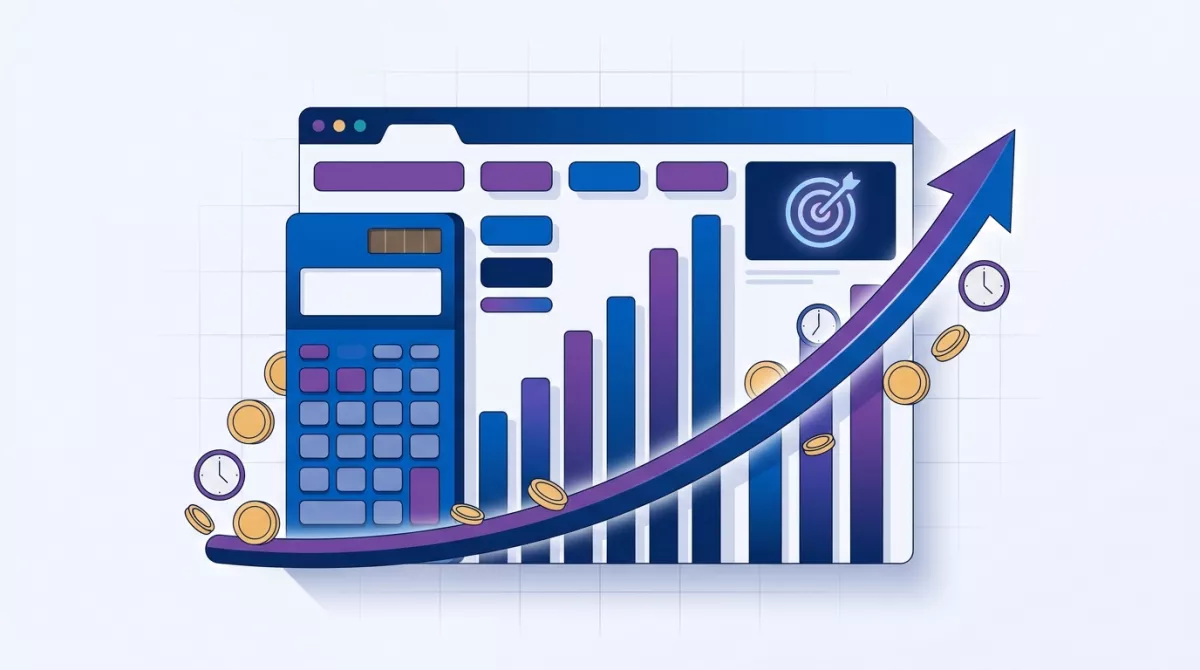
Add numbers 2, 3 and 4 to get your monthly benefit. Divide number 1 by that monthly benefit and you have your payback period in months.
| Payback | What it means | Action |
|---|---|---|
| Under 6 months | Your leakage was genuinely large | Buy it and implement quickly |
| 6–12 months | Healthy and normal for a core system | Buy it, negotiate implementation fees |
| 12–24 months | Depends entirely on adoption discipline | Buy only if an internal owner is assigned |
| Over 24 months | Too expensive or too early | Postpone, or take a smaller edition |
The most common trap: Buying a large system for a team that is not ready. The ROI can look beautiful on paper, but if the team does not use it consistently your monthly benefit is zero and the payback period is infinite.
Frequently Asked Questions
The MDH team regularly maps processes and estimates leakage together with owners before recommending any system. If the numbers do not work, we will say so.
Discuss Your Case